
WELCOME BONUS 300%
UP TO €2000 + 100
FREE SPINS
UP TO €2000 + 100
FREE SPINS
Home → Blackjack
Blackjack at Lanista: Variants, Rules and Payouts
Blackjack Contributes Only 10 Percent to Wagering
For high rollers focused on bonus wagering, blackjack games at Lanista contribute only 10 percent to the overall turnover requirement. This means that for every €100 wagered on blackjack, only €10 counts towards clearing the bonus. This contrasts sharply with slots, which contribute 100 percent.
The welcome bonus offers 300% up to €2,000, requiring substantial wagering for high rollers. A €2,000 bonus at a 40x wagering requirement necessitates €80,000 in turnover. This amount would require €800,000 wagered on blackjack alone to meet the requirement.
Players aiming to fulfil bonus conditions quickly will find blackjack tables, including variants like Lightning Blackjack or Infinite Blackjack, less efficient. The limited contribution means a significantly larger amount of stake is needed compared to other game types.
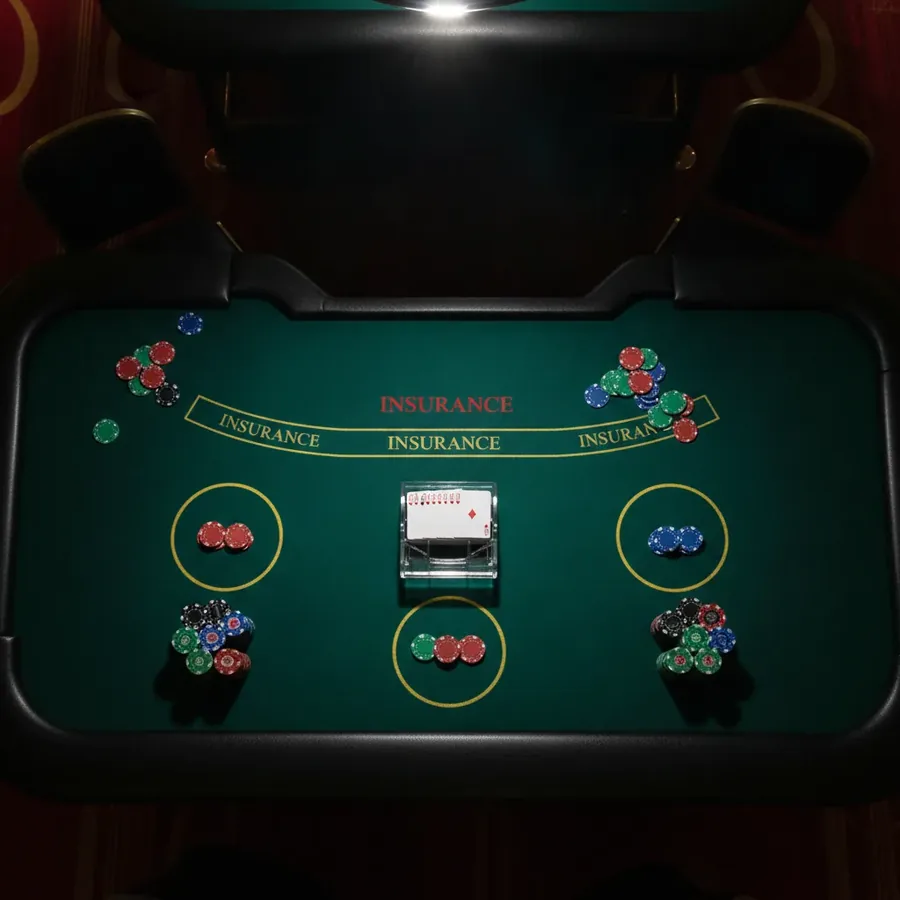
What a Natural Blackjack Practically Pays Out
A natural blackjack, achieved with an initial two-card total of 21, offers a payout of 3:2 for many game variants. For example, Blackjack Liberal Vegas Strip with a €100 stake would return €250, consisting of the original €100 stake plus €150 winnings. This offers a strong return on winning hands.
However, some blackjack tables, like those with a 6:5 payout for a natural, significantly reduce the winnings. A €100 bet on a 6:5 blackjack would only return €220, a decrease of €30 compared to a 3:2 payout. This difference is substantial for high rollers.
The RTP for Blackjack Ein Deck, klassische Regeln, 3:2 is a high 99.85%, demonstrating the favourable odds when playing with optimal strategy and good rules. The Blackjack Liberal Vegas Strip variant also boasts a competitive RTP of 99.72%, with a house edge of just 0.28%.
What Push Means: Stake Returns to You
A 'push' in blackjack signifies a tie between the player's hand and the dealer's hand, resulting in the player's original stake being returned. For instance, if a high roller places a €5,000 bet at an Infinite Blackjack table and both the player and dealer achieve a total of 18, the €5,000 stake is refunded. This scenario is a neutral outcome with no loss or gain.
This outcome is distinct from a loss where the stake is forfeited, or a win where winnings are paid out. Pushes can occur with various hand totals, and their frequency depends on the cards dealt and the dealer's upcard. Understanding this is crucial for managing bankrolls during extended play sessions.
While a push does not result in a loss, it also does not contribute to bonus wagering requirements, as no net winnings are generated from the round. This means rounds ending in a push effectively 'stall' progress towards clearing bonus turnover at a 10% contribution rate.
How long do 100 EUR last at a 1 EUR table?
At a €1 blackjack table, a €100 bankroll theoretically allows for 100 individual hands if every hand results in a loss. However, with the possibility of pushes, wins, and the house edge, the actual duration will be shorter. Games like Blackjack Split / Double / H17 have rule modifiers that can slightly alter outcomes.
Considering the house edge, even at favourable tables like Blackjack 6 Decks, S17, DAS, DOA with a 0.46% house edge, a €100 bankroll will statistically deplete over time. If a player experiences a string of losses or unfavourable outcomes, the €100 could be exhausted in fewer than 100 hands.
The game speed also plays a role; a €1 table might be less appealing to high rollers seeking quicker action. For players accustomed to higher stakes, a €1 table would represent a very slow progression, and the €100 could last for a considerable number of hands if losses are infrequent.
Live Table vs RNG Table: Speed and Limits
Live dealer blackjack tables offer higher betting limits, with Infinite Blackjack and Quantum Blackjack Plus Live accepting stakes up to €5,000 per hand. These tables provide a more immersive experience for high rollers compared to RNG (Random Number Generator) tables, which typically have lower maximum bet limits.
The speed of play can differ significantly between live and RNG tables. While Lightning Blackjack features multipliers up to 25x, the core gameplay involves standard blackjack rounds. RNG tables can sometimes process hands faster due to the absence of human dealers and physical card shuffling, although some live variants are optimized for speed.
For high rollers, the higher limits and the interactive element of live dealer games like Evolution's Lightning Blackjack and Playtech's Quantum Blackjack Plus Live are often preferred. However, the 10% wagering contribution for blackjack means that even with high stakes, bonus clearance will be slow compared to slots.
Blackjack variants at a glance
| Variant | Payout | House edge | Rule | Bet range |
|---|---|---|---|---|
| Blackjack Auszahlung 6:5 statt 3:2 (6 Decks) | 98.15% | 1.85% | Ersatz von 3:2 durch 6:5 fügt exakt +1.39 Prozentpunkte zum Vorteil des Casinos hinzu – stärker als jede andere Regeländerung. Bei $10 Einsatz zahlt Blackjack $12 statt $15. | Blackjack 6:5, Gewinn 1:1 |
| Blackjack Insurance / Versicherung (6–8 Decks) | 92.53% | 7.47% | Separate Nebenwette bis 50% der Hauptwette, wenn der Dealer ein Ass hat. Basisstrategie schreibt IMMER Ablehnung vor (außer Karten zählen bei True Count ≥ +3). Bei einem Deck Vorteil ≈ 5.88% | Insurance 2:1 |
| Blackjack 6 Decks, S17, DAS, DOA, Auszahlung 3:2, Basisstrategie | 99.54% | 0.46% | Dealer steht auf Soft 17; Verdopplung auf jeder Zweierkarte; Verdopplung nach Split erlaubt; keine Aufgabe. Basisstrategie ist für diesen Wert zwingend | Blackjack 3:2, normaler Gewinn 1:1, Insurance 2:1 |
| Blackjack Ein Deck, klassische Regeln, 3:2 | 99.85% | 0.15% | Weniger Decks = niedrigerer Vorteil; ein Deck gibt ca. −0.48 Prozentpunkte gegenüber 8 Decks. Oft durch 6:5 Auszahlung kompensiert. | Blackjack 3:2, Gewinn 1:1 |
| Blackjack Split / Double / H17 – Regel-Effekte | n.a. (Regel-Modifikatoren) | H17 +0.22 Prozentpunkte; RSA −0.08 Prozentpunkte; DAS −0.14 Prozentpunkte | Dealer Hits Soft 17 verschlechtert RTP um 0.22 Prozentpunkte; Resplit Aces verbessert um 0.08 Prozentpunkte; Double After Split verbessert um ca. 0.14 Prozentpunkte; 6 Decks statt 8 – ca. 0.02 Prozentpunkte. | Double – Einsatz ×2 mit einer Karte; Split – bis 4 Hände; Ass-Split meist mit einer Karte. |
| Blackjack Liberal Vegas Strip (liberale Regeln, 3:2) | 99.72% | 0.28% | Günstigste Regelkombination: S17 + DAS + Resplit + Late Surrender. Standardabweichung 1,15 | Blackjack 3:2, Gewinn 1:1 |
Six Decks to Eight Decks in the Shoe
A shift from an eight-deck shoe to a six-deck configuration for Blackjack can offer a marginal improvement in player advantage. The change from eight to six decks reduces the house edge by approximately 0.02 percentage points. This subtle alteration benefits players seeking slightly better odds, though it is less impactful than other rule variations.
In contrast, a Blackjack game utilizing only a single deck, assuming classic rules and a 3:2 payout, presents the lowest house edge at 0.15%. This is significantly lower than games with more decks, where the house edge can increase due to card removal effects, although often compensated by less favourable payouts like 6:5.
For high rollers, understanding these deck variations is crucial for maximizing potential returns. While a six-deck game is common, the single-deck variant, when available with favourable rules, offers superior RTP. For instance, a single deck with 3:2 payouts yields an RTP of 99.85%, compared to a six-deck game at 99.54%.
Six Card Charlie Pays Immediately with Six Cards
The Six Card Charlie rule, where a player winning with six cards is paid immediately, can offer a strategic advantage. While not directly altering the base RTP, it can speed up gameplay and prevent potential losses on subsequent dealer actions. This rule is a significant differentiator in game fairness compared to variants without it.
This rule is distinct from other Blackjack variants, such as those that modify payouts or offer surrender options. Unlike Blackjack Auszahlung 6:5, which increases the house advantage by 1.39 percentage points, Six Card Charlie primarily affects game flow rather than the fundamental odds of winning a hand.
The immediate payout for a Six Card Charlie is a benefit for players engaged in extended play sessions, particularly high rollers who may play numerous hands. While it does not directly reduce the house edge from the theoretical 1.85% in a 6:5 game, it adds a layer of player convenience and certainty.
Ace Split: only one card per hand
When splitting Aces in Blackjack, the rule restricting players to receiving only one additional card per hand is a common but significant modifier. This restriction, often paired with other liberal rules like Double After Split (DAS), impacts the player's ability to capitalize on favourable Aces.
While Resplit Aces (RSA) can improve the RTP by approximately 0.08 percentage points, the 'one card' rule for Ace splits limits its full potential. In contrast, a liberal Vegas Strip Blackjack, featuring S17, DAS, Resplit, and Late Surrender, offers a low house edge of 0.28% due to a combination of beneficial rules.
For a high roller, the implication of this rule is a reduced opportunity to build strong hands from split Aces. Although DAS improves RTP by about 0.14 percentage points, limiting subsequent hits after an Ace split means fewer chances to achieve high-value totals, impacting the overall strategic play at the table.
Perfect Pairs vs 21+3 in House Edge
Side bets like Perfect Pairs and 21+3 introduce additional house edge beyond the main Blackjack game. Perfect Pairs pays for identical cards (e.g., two Kings of Hearts), while 21+3 combines the player's first two cards with the dealer's upcard to form poker hands.
These side bets can significantly increase the overall house advantage compared to the base game. For example, the Blackjack Insurance bet, a separate side bet, carries a substantial house edge of 7.47% when the dealer shows an Ace, which is considerably higher than the standard game.
While specific house edge figures for Perfect Pairs and 21+3 are not detailed in the provided data, they are known to be less favourable than the main game. High rollers should exercise caution with these side bets, as they contribute disproportionately to the casino's advantage over extended play, unlike the more favourable RTP of main Blackjack variants.
Surrender vs Playing Out on 16 vs 10
The Late Surrender option in Blackjack allows a player to forfeit half their bet after the dealer checks for Blackjack, significantly impacting the house edge. This rule reduces the house advantage by approximately 0.08 percentage points, providing a valuable escape route in difficult situations.
When faced with a dealer's 10 upcard and holding a hard 16, surrendering is often the statistically correct play. This contrasts with other rule modifiers, like Dealer Hits Soft 17 (H17), which increases the house edge by 0.22 percentage points, making the decision to surrender a more advantageous tactical choice.
For high rollers, utilizing Late Surrender can mitigate substantial losses on unfavourable hands. While a six-deck game with 3:2 payouts and other favourable rules like DAS and S17 offers an RTP of 99.54%, the ability to surrender can further preserve capital by reducing the negative impact of challenging player totals against a strong dealer upcard.
Splitting Eights vs Standing on 16
Splitting eights is generally advisable in Blackjack, unlike standing on 16. While some rulesets might suggest otherwise, standard strategy dictates splitting eights to create two potentially stronger hands, whereas standing on 16 presents a high risk of busting against most dealer upcards. This strategic difference significantly impacts the player's long-term advantage.
The 'Blackjack 6 Decks' variant, with a 0.46% house edge, mandates a strict approach to splitting eights. In contrast, games with less favourable rules, such as those where the dealer hits soft 17, can increase the house edge. Adhering to basic strategy, which is crucial for the 99.54% RTP of this variant, highlights the importance of this decision.
For high rollers, understanding these nuances can translate into substantial savings or increased winnings. Incorrectly playing eights as a single hand, or standing on 16 when splitting is optimal, could lead to an avoidable increase in the house advantage. This is particularly relevant on tables with a 3:2 payout for blackjack.
Statistics display saves the last 100 rounds
The display of statistics showing the last 100 rounds offers players a snapshot of recent game activity. This feature is particularly useful for high rollers who may wish to observe trends or patterns, although statistically, each round is independent. Understanding this limited historical data can inform, but not guarantee, future outcomes.
While 'Lightning Blackjack' offers multipliers up to 25x, the display of the last 100 rounds does not directly influence the RTP of 99.56%. This statistical tracking is a player aid, distinct from the game's inherent probabilities and house edge. It provides context for recent play rather than predictive power.
For players engaging with games like 'Quantum Blackjack Plus Live,' which features multipliers up to 1,000x, the 100-round history display is a secondary consideration. The primary focus for high rollers remains the game's RTP of 99.57% and the potential for large multiplier wins, not past round outcomes.
Set session stop after 30 percent loss
Setting a session stop after a 30 percent loss represents a responsible gambling measure for high rollers. This predetermined limit prevents significant financial depletion in a single session. It is a proactive step to manage bankroll, independent of the game's specific house edge or RTP.
This self-imposed stop-loss is more crucial than the minor variations in house edge between different blackjack variants, such as the 0.46% in 'Blackjack 6 Decks' or 0.28% in 'Blackjack Liberal Vegas Strip.' A 30% loss limit ensures that even on a losing streak, a substantial portion of the bankroll remains protected.
For instance, a high roller starting with a €10,000 bankroll would automatically cease play if they reached €7,000, limiting the potential loss to €3,000. This strategy is independent of side bets or bonus terms, focusing solely on capital preservation during play, unlike the 10% game contribution to bonus wagering.
Double Down after Split: which tables allow it
The allowance of doubling down after splitting (DAS) is a critical rule that enhances player advantage in blackjack. Tables permitting DAS are generally more favourable, offering a lower house edge compared to those that do not. This rule directly affects strategic decisions for high rollers.
The 'Blackjack 6 Decks' variant explicitly allows DAS, contributing to its favourable 0.46% house edge, whereas other rule combinations can adjust this figure. For example, not permitting DAS would increase the house edge by approximately 0.14 percentage points. This makes tables with DAS more attractive for strategic play.
When comparing games like 'Infinite Blackjack' with a €5,000 bet limit, understanding which tables allow DAS is paramount. This rule, alongside others like S17 (dealer stands on soft 17), significantly influences the optimal strategy for players aiming to minimise the house advantage on higher stakes.
Even Money only possible with Dealer Ace
The 'Even Money' option in blackjack is a specific side bet that is typically only offered when the dealer's upcard is an Ace. This bet pays out at 1:1 if the player has blackjack, effectively 'insuring' their hand against the dealer also having blackjack. It is a separate proposition from the main hand.
This condition for 'Even Money' is distinct from the 'Insurance' side bet, which has a significantly higher house edge of 7.47% in 6-8 deck games. Even Money, when offered, is a concession to the player in a specific scenario, unlike the general 'Blackjack Insurance' which is a losing proposition for most players.
For high rollers, understanding the precise conditions for 'Even Money' is important for managing their overall game strategy. While it may seem advantageous, the primary game strategy and RTP, such as the 99.54% for 'Blackjack 6 Decks', should remain the focus, as side bets often dilute long-term returns.
Contact
Live - online chat
Banking









Providers












Lanista Casino 2026